
SEO Services in Bangalore
Search Engine Optimization
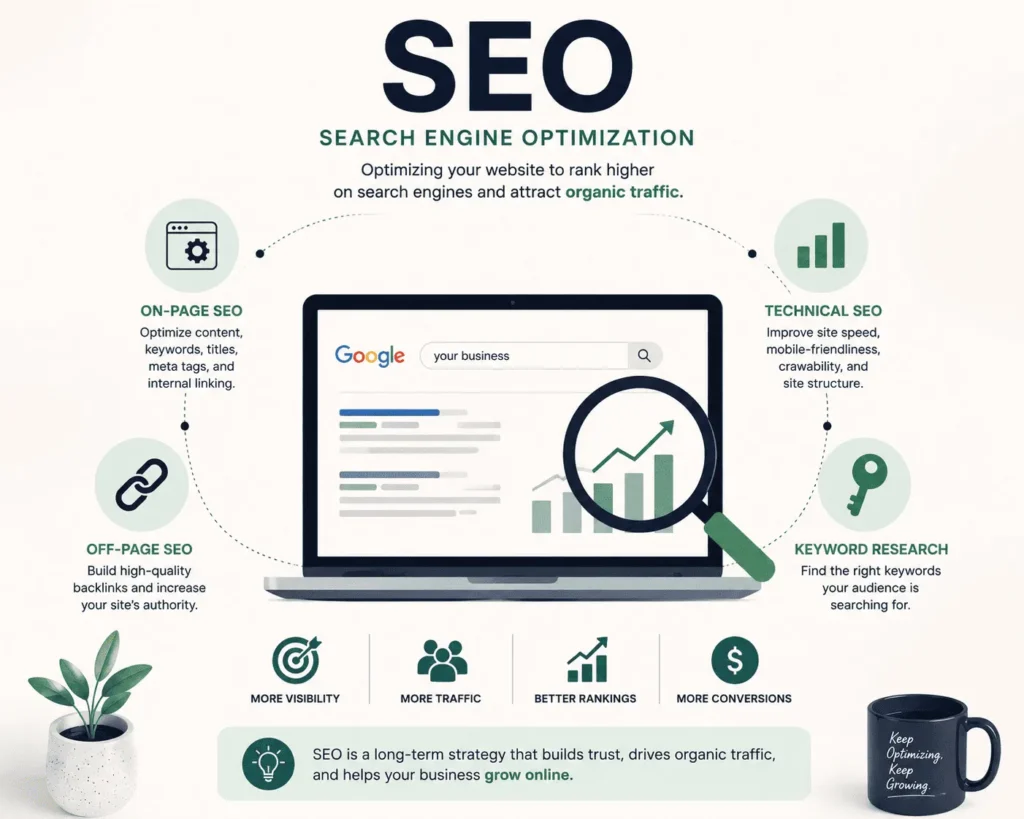
SEO is one of the areas I specialize in — it’s not a single task you check off, it’s a layered strategy built across three areas: on-page SEO, technical SEO, and off-page SEO. My approach is to build a strong foundation first, then expand outward. No shortcuts, no guesswork, no “trust me” without a plan behind it.
If you’re a business owner in Bangalore trying to figure out why your website isn’t showing up on Google, or you’re starting from scratch and want to get it right from day one, this is where I can help.
SEO isn’t a single task, it’s a layered strategy built across three areas: on-page SEO, technical SEO, and off-page SEO. My approach is to build a strong foundation first, then expand outward.
I always start with on-page and technical SEO, since these form the base for everything else. Off-page SEO, like backlinks and external authority-building, comes later, once the foundation is solid.
When it comes to on-page SEO, I handle everything end-to-end: SEO-optimized content, keyword research, meta descriptions, header structuring, internal linking, and more.
The Three Pillars of SEO:
On-page SEO This is everything on your actual website that search engines and readers see: content, keywords, meta descriptions, header structure, internal linking, image alt text, and page structure. This is where I always start, because if your on-page foundation is weak, nothing built on top of it will hold.
Technical SEO The behind-the-scenes health of your site: page speed, mobile-friendliness, crawlability, indexing, site architecture, broken links, and structured data (schema). Search engines need to be able to find, read, and trust your site before they’ll ever rank it. This is invisible to visitors but critical to everything else working.
Off-page SEO Backlinks, domain authority, and external signals that tell Google your site is credible and worth ranking. This comes last in my process, not because it matters less, but because building authority on a shaky foundation is wasted effort. Off-page work is most effective once on-page and technical SEO are solid.
My Process:
1. Study the Existing Website I start by understanding your business, your customers, and the intent behind your website — what it’s meant to achieve and who it’s meant to serve. No two businesses need the same SEO strategy, so this step shapes everything after it.
2. Keyword Research I identify keywords based on intent, whether that’s driving sales, building awareness, or generating leads, so every page targets the right search behavior instead of just chasing traffic for its own sake.
3. Competitor Analysis I study your competitors’ content style, structure, testimonials, and positioning to find gaps and opportunities in your market — the things they’re missing that you can own.
4. Design & Content Execution Based on that research, I get to work writing SEO-optimized content designed to actually rank and convert, not just fill space with keywords.
5. Page Speed Check An initial check on load times and site performance, since speed directly affects both rankings and user experience. A slow site loses visitors before SEO even gets a chance to work.
6. SEO Audit A full audit of what’s working, what’s missing, and what needs fixing across the site — the diagnostic that shapes the priority order of everything that follows.
7. Page Speed Check (Round Two) A second check post-optimization, to confirm improvements have actually moved the needle, not just look good on paper.
8. Off-Page SEO Backlink building and other off-page strategies to boost domain authority, once the foundation underneath is solid enough to support it.
9. Blogs & Content Momentum Consistent blog content to support long-term organic growth and keep your SEO momentum going well after the initial setup is done. SEO isn’t a one-time project — it compounds with consistency.
SEO Timeline: What to Expect, Month by Month:
This is the question I get asked most, and the honest answer is: SEO is a long-term strategy, not a quick fix. If someone promises overnight rankings, that’s a red flag — that’s not how real SEO works. Here’s what a realistic timeline actually looks like, broken down so you know what’s happening at every stage.
Month 1 — Audit & Foundation This is discovery and diagnosis. I run a full SEO audit, study your competitors, complete keyword research, and check your site’s technical health and page speed. Nothing gets “ranked” yet — this month is about understanding exactly where you stand and building the roadmap for everything after it. You’ll likely see zero visible movement in rankings, and that’s expected.
Month 2 — On-Page Optimization Begins I start implementing on-page fixes: optimizing existing content, restructuring headers, improving meta descriptions, fixing internal linking, and addressing any technical issues flagged in the audit. Behind the scenes, Google starts re-crawling and re-indexing your updated pages. You may start seeing small technical improvements (like faster load times), but ranking movement is still minimal.
Month 3 — Early Signals Google has now had time to properly crawl and register the on-page changes. This is usually when you start to see the first small signs of life — minor keyword position improvements, slightly more impressions in Search Console, maybe a small uptick in organic traffic. It’s early and often inconsistent, but it’s the first real feedback that the foundation is working.
Months 4–6 — Momentum Builds Content publishing ramps up, and off-page work (backlinks, authority building) typically begins around this stage, once the on-page and technical foundation is solid. This is usually when businesses start seeing meaningful movement: improved rankings for target keywords, more consistent organic traffic, and better visibility for the terms that actually matter to your business. It’s not dramatic yet, but it’s steady and real.
Months 6–9 — Compounding Results Your site’s authority is building. Rankings that started moving in months 4-6 tend to climb further and stabilize. Content published earlier starts pulling its own weight in search. This is typically where organic traffic growth becomes noticeable in a way that’s hard to ignore — not just to you, but to your competitors.
Months 9–12 — Established Authority By this stage, a well-executed SEO strategy usually shows strong, sustained results: better rankings across a wider set of keywords, consistent organic traffic, and organic leads that don’t require ongoing ad spend to generate. This is the payoff of the consistency built over the previous months — and it tends to keep compounding well past the 12-month mark.
Beyond 12 Months — Ongoing Growth SEO doesn’t have a finish line. Search algorithms evolve, competitors adjust, and your business itself changes. What month 12 really represents isn’t an end point — it’s the moment your SEO foundation is strong enough that continued effort compounds faster and more efficiently than it did at the start.
A quick note on technical fixes: some technical issues (like site speed or indexing errors) can show quicker improvements than organic rankings — sometimes within weeks. But genuine organic ranking growth is a slower, compounding process. I’ll always set realistic expectations upfront and keep you updated on progress along the way, because good SEO is built on consistency, not shortcuts.
What You Get:
- A full SEO audit of your current site
- Keyword research based on real search intent, not guesswork
- Competitor analysis to find gaps in your market
- On-page optimization across your website’s content and structure
- Technical SEO fixes to improve site health and crawlability
- Page speed checks before and after optimization
- Off-page strategy once your foundation is ready for it
- Ongoing blog content to sustain long-term organic growth
- Regular updates so you always know what’s being done and why
Who This Is For:
This works best if you’re a business owner or founder who wants to build long-term, sustainable visibility on Google — not someone looking for a quick traffic spike before an event or launch. If you’re serious about your website becoming an actual source of leads over time, and you’re willing to invest in the 3-6 month runway that real SEO takes, this is built for you.
FAQs:
How long does it take to see results from SEO? Most businesses see meaningful movement — better rankings, more organic traffic — within 3 to 6 months, with stronger results building over 6 to 12 months as your site gains authority. Technical fixes can show quicker improvements, but genuine organic growth takes time. If anyone promises fast, guaranteed rankings, that’s not how real SEO works.
Do I need to redo my whole website for SEO to work? Not necessarily. A lot of SEO work happens within your existing site structure — content, meta data, internal linking, technical fixes. A full rebuild is only needed if your current site has deep structural issues that are actively working against you.
What if my business is in a competitive industry? Competitive keywords take longer and need a stronger content and authority strategy, but that’s exactly what the process above is built to handle — starting with a clear picture of what your competitors are doing well (and where they’re not), so we’re not guessing.
Can I stop SEO once I start ranking well? You can pause, but rankings built through SEO aren’t permanent without some maintenance — competitors keep optimizing too, and Google’s algorithm keeps evolving. Most businesses shift from “building” mode to a lighter “maintaining and growing” mode rather than stopping entirely.
Do you guarantee first-page rankings? No one honestly can — anyone who guarantees specific rankings is not being straight with you. What I can guarantee is a strategy built on real research, consistent execution, and transparency about what’s working and what isn’t, every step of the way.